
Spring 2026’s softest boho obsession is phulkari — Punjabi floss-silk darning worked from the reverse until the cloth blooms with golden sun-disc florals and dowry-chest warmth.
There is a particular hour in the Punjab — the one just before the mustard fields catch fire with sunset — when the air goes golden and everything soft begins to glow. That is the hour phulkari belongs to. It is the hour a grandmother in a Patiala courtyard turns a length of coarse, earth-brown khaddar cotton face-down across her lap, threads a single strand of pat silk through the eye of a slender needle, and begins to darn from the reverse of the cloth. One tiny stitch. Then another. Then another. And slowly, almost like a rumor traveling through the weave, a sun-disc medallion begins to bloom on the right side of the fabric — gilded, geometric, warm as a dowry trunk opened for the first time in fifty years.
That, darling, is the magic we are falling in love with for spring 2026. Phulkari — literally flower-work — is the Punjabi floss-silk embroidery tradition that has clothed brides and grandmothers across Ludhiana, Amritsar, and Hoshiarpur for more than three centuries, and this season it is quietly slipping off the dowry trunk and onto the kind of breezy, wearable pieces a modern boho woman actually wants to live inside. Think of it as the embroidered soul-sister to every other stitched story you have loved — richer than block print, warmer than eyelet, softer than sequin, and entirely, unrepeatably hand-made.
What makes phulkari so romantic is the reversal at the heart of it. The embroiderer never sees her finished design while she works. She stitches from the wrong side, counting warp threads by touch and memory, trusting that the darning stitches she is laying down blind will bloom on the other side into the bagh — the garden — her grandmother taught her to see in her mind’s eye. It is, in every sense, a meditation on faith. On the other side of every patient stitch, something beautiful is waiting to be turned over.
Translated into your spring wardrobe, the phulkari mood is less about literal ethnic embroidery and more about a feeling — the feeling of wearing something that looks like it carries a story in its stitches. Soft grain-toned cottons. Fluttering sleeves that move like wheat in a warm wind. A peek of open handwork at the neckline, where a silken thread has been coaxed into something quietly radiant. That whisper of gold-against-oatmeal that makes your skin look sun-warmed even on a cloudy morning.
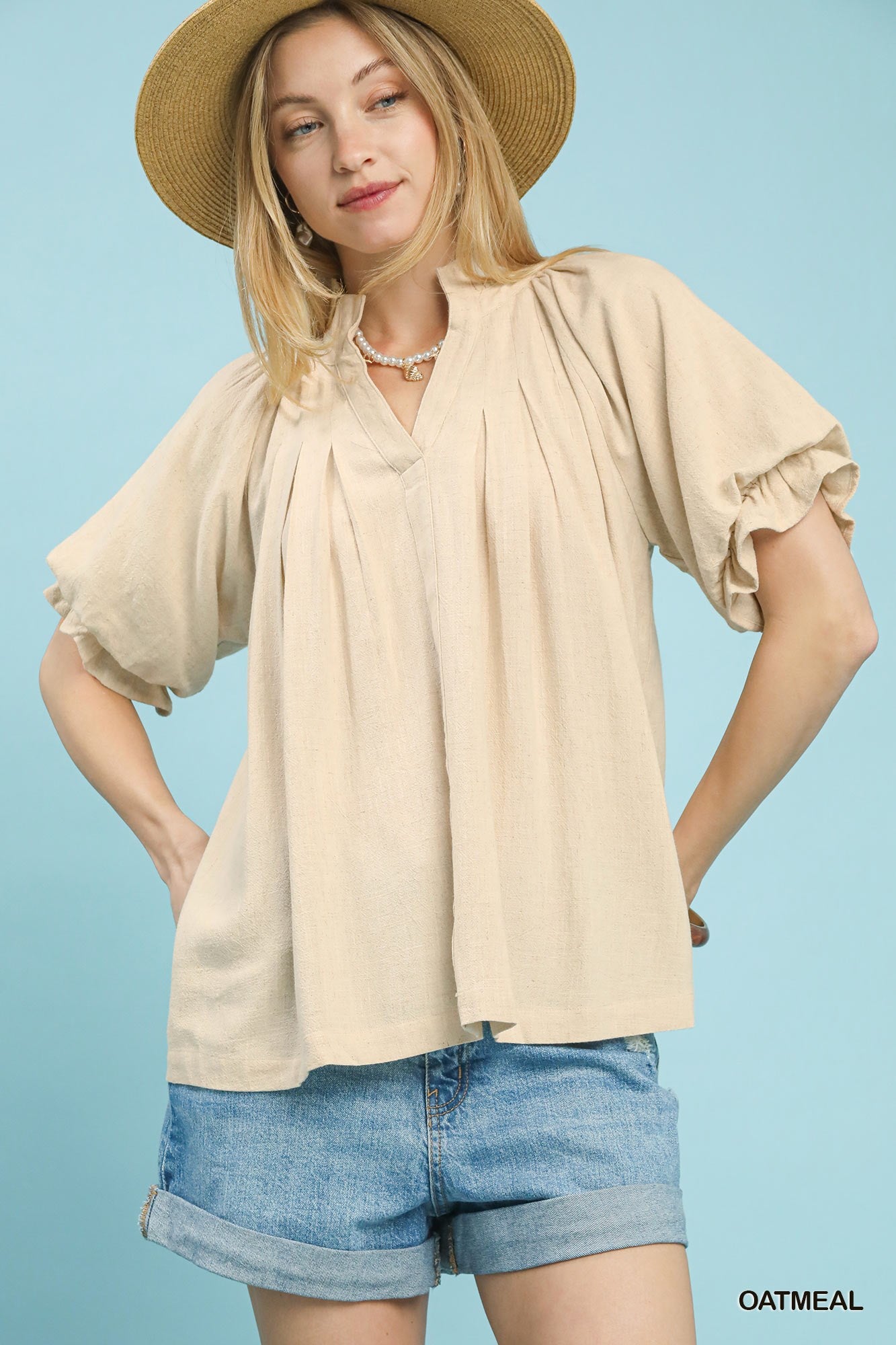
Start with the kind of top that carries the spirit of a phulkari shawl without the formality. This season I keep reaching for the Umgee Linen V-Neck Flutter Sleeve Top — the linen is thirsty and textured and catches light the way khaddar cotton does, the flutter sleeves move like silk threads lifting off a needle, and the V-neck leaves that perfect hollow of collarbone for a long strand of antique brass beads to rest in. Layer it over high-waisted linen trousers for afternoon bazaar-browsing; knot it at the waist over a slip skirt for a candlelit courtyard dinner.
For the days you want a little more pattern — the days that call for motif, for story, for something that looks embroidered even before you lean in close — slip into the POL Printed Woven Lace Back Round Neck Sleeveless Top. The print reads like a miniature phulkari garden, the lace back is the kind of surprise detail Punjabi grandmothers would tuck into a wedding piece just for the bride to discover, and it looks extraordinary under a long linen duster or tucked into a tiered maxi skirt with a stack of thin gold bangles chiming at your wrist.
Phulkari also, historically, lives in openwork — in the way the base cloth breathes between the silken florals. The modern translation is crochet, lace, scalloped edges, little pinholes of skin showing through handwork. The POL Lace Trim Openwork V-Neck Crochet Tank with Scalloped Edge is doing exactly that for me right now — scalloped hem like the edge of a bagh, openwork like a courtyard through a jali screen, and a length that tucks perfectly into wide-leg pants or a tea-stained midi skirt.
And when the evening turns and the jasmine comes out, let the POL Asymmetrical V-Neck Short Sleeve Lace Top do the storytelling. An asymmetrical neckline is the modern cousin of a shawl thrown half off one shoulder at a dowry showing — effortless, elegant, a little bit dangerous.
The common thread through all of it — the real phulkari lesson — is that beauty happens on the reverse of patience. Every piece of slow, hand-touched clothing you pull on is a tiny act of turning the cloth over to see what bloomed.
Come turn a few cloths over with us. Wander the spring collection at Soul Flow Apparel and find the piece whose quiet embroidery, textured cotton, or whisper of handwork feels like it was stitched from the reverse just for you. Shop Soul Flow Apparel →
Soul Flow Apparel
Shop the Story
Hand-picked pieces from Soul Flow Apparel to bring the look home.