
Spring 2026 belongs to batik — the wax-drawn, indigo-dipped cotton that carries centuries of Javanese craft into your softest boho rotation.
There is a small canting in a workshop somewhere on the northern coast of Java, a copper cup the size of a thimble with a hair-thin spout, and a woman is holding it the way you’d hold a pen if your pen wrote in molten gold. She dips into a pot of warm beeswax mixed with pine resin, steadies her wrist, and begins to draw on cotton — slow petals, curling vines, tiny birds no bigger than fingernails. When the wax cools, she’ll dip the whole length of cloth into indigo so dark it looks like a midnight pond, and everywhere the wax has touched, the dye refuses to go. That refusal is the miracle. That refusal is batik, and this spring, it is climbing quietly back into everything a woman might want to wear to a garden, a pier, or a candlelit dinner on a terrace where the evening smells like jasmine.
What makes batik feel so different from every other print on your rail is that it is drawn, not stamped — each line is a breath from someone’s hand. You can see the tiny tremors. You can see where the wax hesitated and where it flowed. Block print gives you rhythm; shibori gives you constellation; batik gives you a whispered letter. Spring 2026’s version is less loud than the tourist-market florals you might remember and far more romantic: indigo and ecru, cinnamon and chalk, soft rust bleeding into cream, with patterns that look like cracked-earth maps or the underside of a fern leaf. It reads as quietly expensive even when it isn’t, because it looks like something your grandmother’s friend would have folded into tissue paper and carried home from a long trip.
The easiest way in? A batik-inspired harem pant in a soft Sahara print — low at the hip, drop-crotch enough to feel like silk curtains, gathered at the ankle so the cotton flutters when you walk. Pair it with a cropped crochet cami in floral embroidery and suddenly you’re the girl on the veranda in Bali, the one whose iced tea sweats onto a teak table while the ceiling fan turns slowly above. The batik does the heavy lifting. You just have to show up.
For slightly cooler evenings — the kind where the sun drops and the sea breeze starts to lift goosebumps along your forearms — the move is a lace-inset puff sleeve blouse layered over an indigo-toned bottom. The white-on-indigo contrast is the oldest love story in Indonesian textile history, and you don’t have to study it to feel it; you just have to wear it and watch how the two tones talk to each other in lamplight.
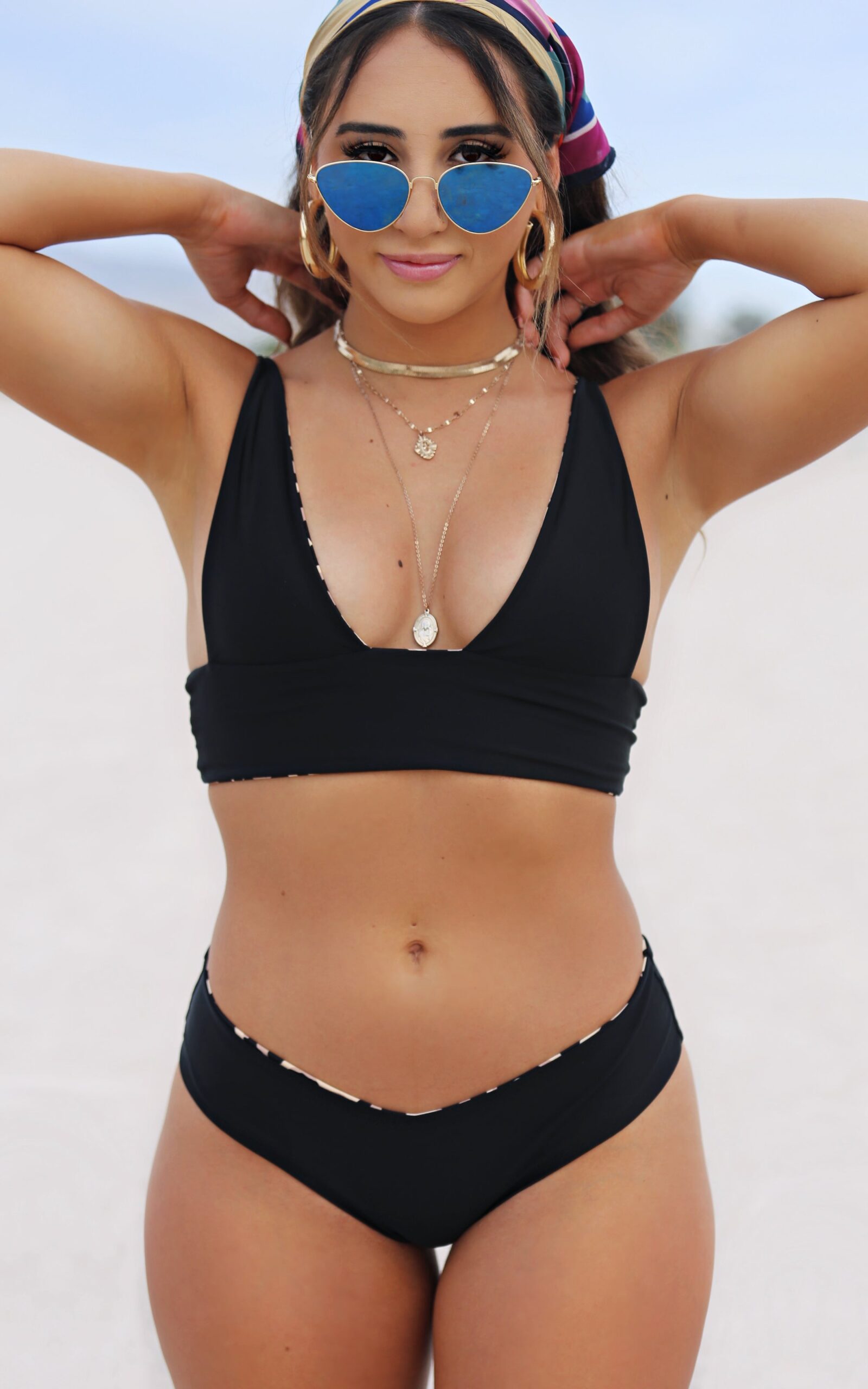
And because batik began on the coast — because the women who drew those petals lived ten minutes from the tide — it has always belonged in swimwear, too. A reversible Bali bralette top gives you two sunsets for the price of one: a bright island side for noon, a deep dye-bath side for golden hour. Tuck it under a gauzy cover-up, wind a sarong around your hips, and every beach walk becomes a small ceremony.
A few quiet ways to wear the batik mood this season: indigo with bare skin and nothing else; cinnamon batik with white cotton and raffia sandals; a single batik scarf tied as a top and paired with wide leg linen; a batik sarong twisted into a halter for the long drive home from the coast. The rule, if there is one, is that batik prefers softness — it wants to be handled gently, hung damp in shade, folded rather than crumpled. Treat it like a letter, because that is what it is.
Step into the season the way those women in Java step into their cloth: slowly, reverently, with your hands ready to trace the lines someone drew for you with a thimble full of gold. Shop the batik-spirit pieces at Soul Flow Apparel and wrap yourself in the oldest, softest form of storytelling cotton can carry.
Soul Flow Apparel
Shop the Story
Hand-picked pieces from Soul Flow Apparel to bring the look home.