Spring 2026’s softest love letter to Mali’s hand-stamped bogolan mud cloth — a slow, riverbank ode to fermented-earth pigments and Bamako geometry styled four boho ways.
There is a particular quietness to a strip of bogolan cloth — a hush you can almost hear if you hold it close — and that hush is the sound of the Niger River running slowly past Bamako, of a Bamana grandmother dipping a thin bamboo stick into a clay jar of year-old fermented mud, of geometry unspooling line by line across handspun cotton until a length of cloth becomes a kind of soft-spoken prayer. Spring 2026 is asking us to listen for that hush. After a long winter of brittle synthetics and over-bright prints, the season is leaning toward fabrics that remember the earth they came from — and few cloths remember more deeply than Mali’s bògòlanfini, the mud-cloth that taught the world how beautiful soil could be when handled with patience.
The story is older than fashion. Long before runways borrowed the language, women across the Beledougou region were soaking handwoven cotton in a tea brewed from n’galama leaves, painting on dark river-mud that had aged in clay pots through a full rainy season, and watching as the chemistry of tannin and iron oxide turned each stroke a soft, permanent charcoal. Bone-white symbols rose against fields of warm black — tiny ladders, suns, fish-spines, twin diamonds — each one a sentence in a private grammar of protection, fertility, courage. Cloth was not decoration. Cloth was a letter from one woman to another, folded into a wrapper and worn home through the dust.
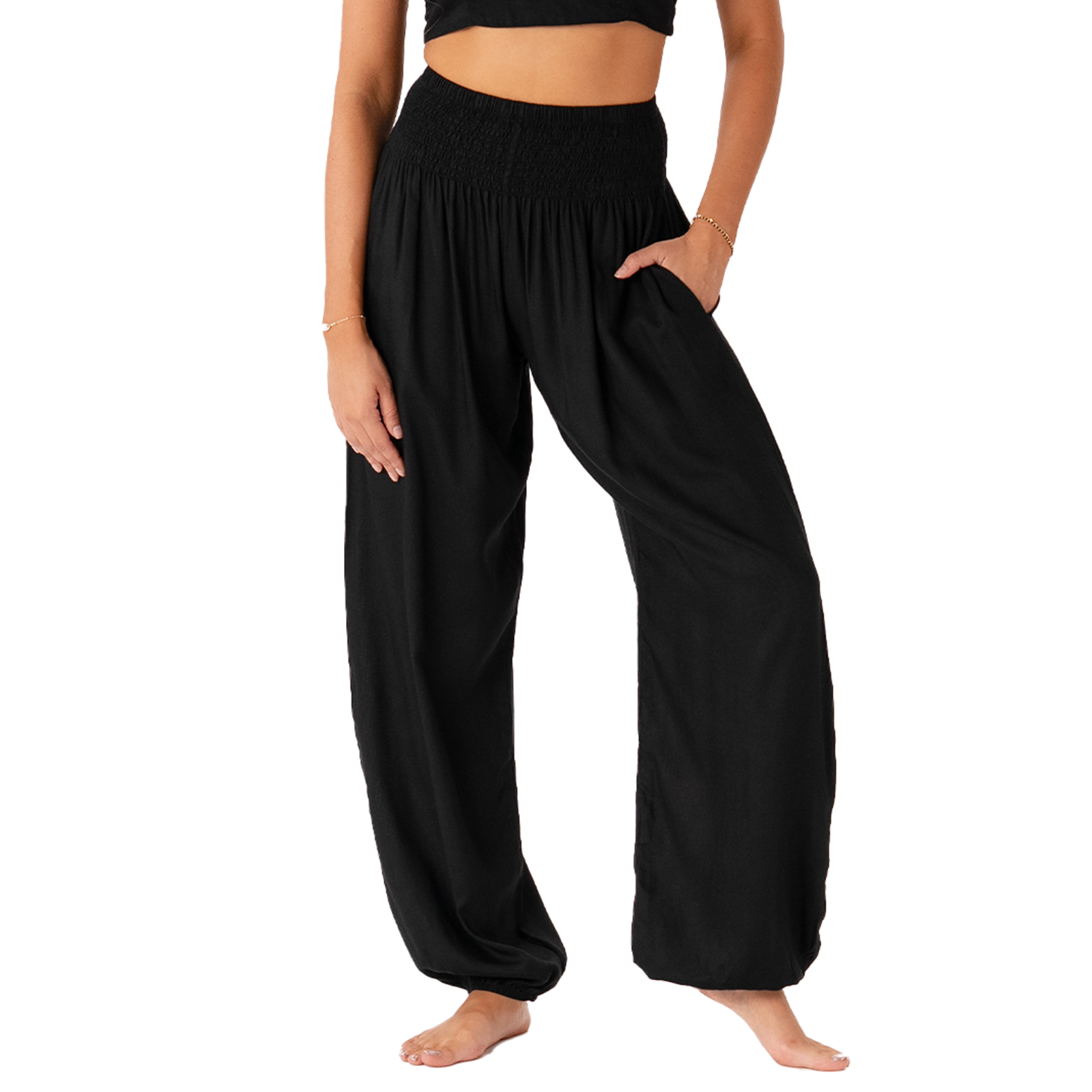
This spring, the boho wardrobe is borrowing that grammar with reverence. Stylists at the Marrakech and Lagos shows leaned into bogolan-inspired prints layered over the calmest possible base — soft cottons, slow silhouettes, jewelry that knows when to whisper. The trick is to let the geometry breathe. One mud-cloth piece is plenty; everything else should pool around it like still water. Begin at the bottom with the loosest, longest line you own. A pair of inky, drape-heavy black harem pants is exactly the kind of canvas bogolan was made to live against — the deep matte black echoes the fermented-earth ground of traditional cloth, and the gathered ankle keeps the silhouette low and grounded, the way a Sahel afternoon settles slowly toward dusk.
Up top, lean into texture instead of more pattern. A creamy, openwork crochet flower motif tank in soft ivory cotton is the bone-white answer to bogolan’s dark fields — its little hand-hooked rosettes feel like a Western cousin of those tiny hand-painted symbols, all warmth and quiet handwork. Throw a bogolan-print scarf or wrap loosely across the shoulders for an evening on a riverside terrace, and the conversation between the two textiles begins.
For warmer afternoons — beach picnics, golden-hour gardens, the kind of April day that asks you to walk somewhere — trade the long line for a softer one. The Pacific Cotton Shorts carry a sun-faded, hand-stitched feeling that lives perfectly beside mud-cloth tones, their easy waist and gentle drape echoing the relaxed posture of a Bamako wrapper without trying to imitate it. Pair with a flowing kimono in earth pigments from our kimono collection and let the layers move with you the way river-cloth moves on a clothesline at dusk.
Finish the look at the ankle, where bogolan stories have always traveled. A delicate Moon Dancer anklet catches the light the way a single white symbol catches the eye on a dark wrapper — small, quiet, unmistakable. There is a reason West African women have always treated the ankle as a place of small ceremony; it is the part of the body closest to the earth that taught us how to dye in the first place.
What spring 2026 ultimately offers — through bogolan, and through every textile this season is rediscovering — is permission to dress more slowly. To wear something that someone’s hands actually touched. To let one beautifully made piece carry a whole outfit, instead of asking ten anxious pieces to share the load. That is the boho promise the river has always been telling us, in its long, dust-gold way.
Pour yourself a quiet hour, follow the geometry, and come let us help you find your own. Step gently into the rest of the season with Soul Flow Apparel — every wrap, tank, anklet, and harem pant chosen with the same patience the mud itself was taught.
Soul Flow Apparel
Shop the Story
Hand-picked pieces from Soul Flow Apparel to bring the look home.